An Easy-to-Use Nanoparticle Analyzer for Multi-User Laboratories
In a shared laboratory, the hardest specification to satisfy is not sensitivity or resolution. It is reproducibility across people. An instrument booked by a dozen users of widely differing experience will only produce comparable data if the measurement does not depend on operator judgement — and most nanoparticle sizing methods depend on it heavily.
This page looks at what makes an easy to use nanoparticle analyzer genuinely workable in a multi-user setting: where inter-operator variance actually comes from, what maintenance and sample-volume requirements do to a service catalogue, and how to size a service offer around a fast measurement.
Where inter-operator variance really comes from
When two users measure the same sample and disagree, the cause is usually one of five things, and none of them is carelessness.
- Adjustable acquisition settings. Camera level, gain, detection threshold: methods that expose these produce results that legitimately depend on how they were set. Two competent operators, two defensible settings, two different numbers.
- Calibration state. If a method requires calibration, results depend on when it was last performed, by whom, and with which standard.
- Dilution decisions. Choosing a dilution factor to land inside the working range is a judgement call, and each additional step compounds pipetting error.
- Sample preparation latitude. Filtration, degassing and buffer choices vary between users and change the material before it is measured.
- Instrument condition. Where a fluidic path is involved, the state it was left in by the previous user becomes part of your measurement.
Reducing the number of decisions available to the operator is therefore the most direct route to comparable data in a shared setting — more effective than any amount of training documentation.
Design choices that remove operator dependence
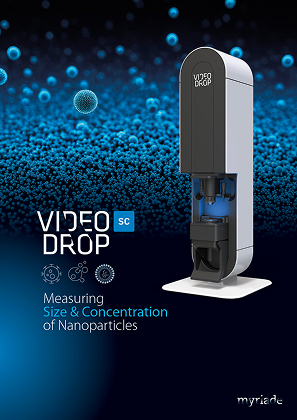
The Videodrop SC is built on interferometric light microscopy: a camera and dedicated signal processing detect the interference between the light scattered by each individual nanoparticle and the incident beam, which yields a number-based size distribution and a particle concentration. What matters for a shared instrument is less the physics than what the design does not require.
- No calibration step. There is no calibration state to track, expire or get wrong between users.
- No camera settings or detection thresholds to tune. This removes the largest single source of inter-operator bias, because the operator is not asked to make the choice.
- No fluidics. Loading means pipetting 5–10 µL onto a slide. Nothing can clog, cleaning takes seconds, and no user inherits the previous user’s fluidic path. For facilities operating under cleaning validation, an entire category of complexity disappears.
- Minimal dilution. A working range of 108–1010 particles/mL means many preparations are measured with little or no dilution, so fewer judgement calls and less compounded pipetting error.
- Live imaging of the sample. Debris and aggregates up to 10 µm are visible on screen, so an inexperienced user can see that a sample is unsuitable instead of unknowingly reporting a distorted number.
The practical consequence is a short path to competence: a new user can be trained to produce trustworthy data quickly, because there is little to get wrong. That matters more in a core facility than peak specification, since most of the data will be produced by occasional users, not by the instrument’s expert.
Sample volume: what a single drop changes
A measurement consumes 5–10 µL, and because it is non-denaturing and label-free, the material can be recovered and re-used. In a shared setting this reshapes what can be offered:
- Precious samples become measurable. Patient plasma, small-scale isolations, early formulation screens and single-well harvests are no longer excluded on volume grounds.
- Measurement stops competing with downstream assays. Users do not have to choose between characterising a sample and keeping enough of it for omics or functional work.
- In-process sampling becomes acceptable. Taking a reading between process steps does not meaningfully deplete the batch.
Maintenance, robustness and uptime
In a shared facility, uptime is a service commitment. Absence of a fluidic circuit removes the most common maintenance burden of nanoparticle instrumentation — there is no line to unblock, no pump to service and no flush protocol between samples. Cleaning between measurements is a matter of seconds rather than a procedure, which is also what makes back-to-back scheduling realistic. For facilities that need it, 21 CFR Part 11 compliant software is available as an option, which matters when the same instrument serves both research and regulated work.
Sizing a service offer around a fast measurement
A measurement cycle of under a minute, including loading, processing and cleaning, means roughly 100 samples can be screened in half a day — where a slower per-particle technique might spend a full day on a single experiment. That changes what a service catalogue can contain:
- Batch screening as a listed service, rather than a favour that consumes a whole session.
- Same-day turnaround on size and concentration, so users can act within their own experiment.
- A triage layer ahead of expensive methods. Screen broadly and fast, then commit electron microscopy, infectious titer, qPCR or omics to the samples that deserve them. This is the highest-value position for the instrument in a shared facility, and the easiest to justify in a budget request.
- Walk-up access for trained users, which is only realistic when there is nothing to calibrate or tune.
Typical applications across a mixed user base include extracellular vesicle counting and sizing, lipid nanoparticle formulation screening and stability studies, and viral vector work.
Honest limits to state in your service description
Two constraints should appear in any service documentation, because they set user expectations correctly and prevent disappointed bookings. First, the detection threshold is around 80 nm; particles well below that fall outside the window, so sub-80 nm work needs a complementary method. Second, the working concentration range is 108–1010 particles/mL, so very concentrated material still requires dilution — far less than methods needing thousand-fold dilution, but not none. An independent comparison by Sausset et al. (2023) documented that trade-off: a higher detection threshold than particle tracking, offset by speed, simpler handling and fewer consumables.
Key takeaways
- Inter-operator variance comes from adjustable settings, calibration state, dilution decisions and inherited instrument condition — remove the decisions and the variance falls.
- No calibration, no settings to tune and no fluidics means results do not depend on who ran the sample.
- A 5–10 µL, non-denaturing measurement opens up precious samples and does not compete with downstream assays.
- Around 100 samples in half a day supports batch screening, same-day turnaround and triage ahead of expensive methods.
Building a service around shared instrumentation? A typical evaluation runs 50 to 100 samples over two days, with a qualification call beforehand and a results debrief afterwards — request a demonstration.
Choose your application

Choose your product
Measuring
Size & Concentration
of Nanoparticles
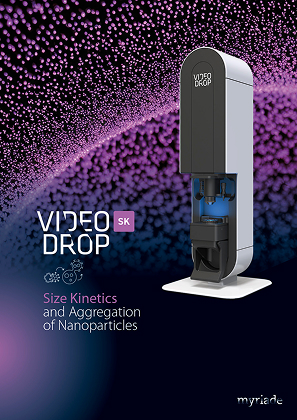
Size Kinetics
and Aggregation
of Nanoparticles