Virus Counting: What Actually Drives the Cost per Run
Instrument purchase price is negotiated once. Cost per run is paid every day for the working life of the instrument, and over a few years it usually dominates. Yet it is the harder number to obtain, because it is not a line on a quotation — it is assembled from reagents, consumables, labour, failed runs and the assays that a fast screening method lets you avoid.
This page sets out a framework for calculating virus counting cost per run honestly, with the line items that are easy to miss. It deliberately contains no prices: yours depend on your region, contract and volumes. What it gives you is the list of questions to put to every supplier, including us.
The line items behind a fluorescence-based count
Fluorescence-based virus counting works by staining viral particles — typically nucleic acid and protein dyes — and counting labelled events as they pass a detector. It is a well-established approach that gives a rapid physical count, and the staining is what provides discrimination against unlabelled background. Every element of that workflow carries a recurring cost.
- Dye or reagent kit. The dominant recurring cost, priced per test and consumed whether the run succeeds or not.
- Dedicated consumables. Cuvettes, capillaries, cartridges or chips, depending on the fluidic design.
- Sheath and cleaning fluids, plus their disposal.
- Calibration and reference standards, priced per run or amortised across a session.
- Blanks and controls. Buffer blanks, unstained controls and dye-only controls consume kit and instrument time without producing sample data.
- Reagent shelf life. Kits expire. A laboratory running intermittently discards a real fraction of what it buys — a cost that never appears in a per-test price.
- Cold-chain storage for dyes and antibodies.
The line items that are usually forgotten
These are frequently larger than the reagent cost, and almost never appear in a comparison table.
- Labour, at the fully loaded rate. Staining requires incubation, and often washing or dilution. Thirty minutes of scientist time per sample, at a realistic hourly cost, will typically exceed the dye. Count preparation time, not just instrument time.
- Failed and repeat runs. A dilution that lands outside the working range, a fouled fluidic path, an expired reagent — each consumes the full cost of a run and produces nothing. A method with a 15% repeat rate is 15% more expensive per usable result than its nominal cost suggests.
- Sample consumed. For a precious early-stage or clinical sample, material consumed is a real cost even though it has no invoice. If a measurement costs you an aliquot you cannot re-make, that dominates everything else.
- Maintenance and service contract, divided by realistic annual run volume — not by capacity.
- Downtime. Fluidics require flushing, unblocking and periodic service. Idle instrument plus idle staff is a cost even when nothing is consumed.
- Method transfer and re-qualification when a reagent lot changes, which is a labelled-method burden that a label-free method does not carry.
A framework you can populate
Compute cost per usable result, not cost per run:
Cost per usable result = (reagents + consumables + fully loaded labour time + amortised service and maintenance) ÷ (1 − repeat rate)
Then add the sample volume consumed, valued according to how replaceable the material is, and subtract the value of any slower assay the fast method lets you skip. That last term is often the largest and is almost always ignored — a screening measurement that prevents you from running an unnecessary ELISA plate or an unnecessary infectivity assay has saved more than its own cost.
What changes with a label-free measurement
Interferometric light microscopy, the principle behind the Videodrop SC, detects each particle through the interference between the light it scatters and the incident beam. No dye, no antibody, no conjugation step. In cost terms, several line items go to zero rather than getting cheaper:
- No dye or reagent kit — and therefore no expiry waste, no cold-chain storage and no lot-to-lot re-qualification.
- No staining labour. Loading is pipetting 5–10 µL onto a slide; the complete cycle including loading, processing and cleaning runs in under a minute.
- No calibration standard, because the method requires no calibration step.
- No fluidics, so no sheath fluid, no flush protocol, and nothing that can clog — which is what removes the most common cause of failed runs and downtime.
- Minimal dilution. A working range of 108–1010 particles/mL means many process samples are measured with little dilution, which removes both the consumables and the commonest cause of an out-of-range repeat.
- Sample recovered. The measurement is non-denaturing, so 5–10 µL can be returned to the workflow.
The independent comparison by Sausset et al. (2023) reported exactly this operational profile against particle tracking on extracellular vesicles and bacteriophages: faster, easier to handle and requiring fewer consumables, at the cost of a higher detection threshold. The economics are a consequence of the physics, not a pricing decision.
What you give up, and where the cost advantage does not apply
A label-free count is cheaper per run because it does less, and in some workflows what it does not do is exactly what you need.
It is not specific. Staining provides discrimination: a labelled count distinguishes virus from unlabelled background. An optical count registers every particle above threshold, virus or not. In a crude, debris-laden harvest, that difference is decisive and no amount of cost advantage compensates for it. This is consistent with the independent evaluation by Turkki et al. (Viruses, 2021), which found ILM particle counting especially useful for high-concentration, purified virus preparations, while certain non-purified sample types or very small viruses may be difficult to characterise, or may require standard-curve or background-subtraction strategies that lengthen the analysis.
It has a detection floor of around 80 nm. Larger enveloped viruses such as lentivirus, at roughly 100–130 nm, are comfortably in range. Smaller viruses are not, and for those the comparison does not arise.
It reports a physical count, not infectivity. That is true of fluorescence-based counting too, but it bears repeating: neither replaces a functional assay.
Questions to ask every supplier
- What is the consumable and reagent cost per test, at my realistic annual volume?
- What is the shelf life of every consumable, and what fraction will I discard at my run rate?
- How much hands-on preparation time per sample, and how much instrument time?
- What is the realistic repeat rate on samples like mine, and what causes repeats?
- What sample volume is consumed, and can it be recovered?
- What does the service contract cost, and what is the expected annual downtime?
- What has to be re-qualified when a consumable lot changes?
- What can I stop doing if I have this measurement — and what must I still do?
The last question is the one that decides the business case. A cheap measurement that adds a step is expensive; a measurement that lets you defer slower assays to fewer samples pays for itself regardless of its own unit cost.
Key takeaways
- Cost per run is dominated by labour, repeat rate and expiry waste — not by the headline reagent price.
- Compute cost per usable result, then add sample consumed and subtract the assays you avoid.
- A label-free method removes dye, calibrant, sheath fluid, staining labour and clog-driven repeats entirely.
- What you give up is specificity and sub-80 nm detection — on crude or small-virus samples, that outweighs the saving.
Building a cost comparison? See how the Videodrop SC counts particles with no dye, no calibrant and no fluidics — request a demonstration and run the numbers on your own samples.
Choose your application



Choose your product
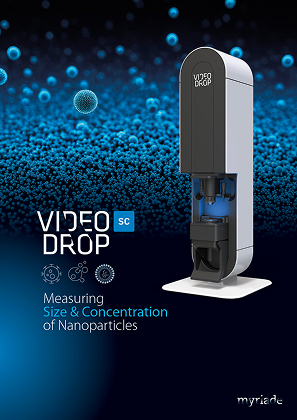
Measuring
Size & Concentration
of Nanoparticles
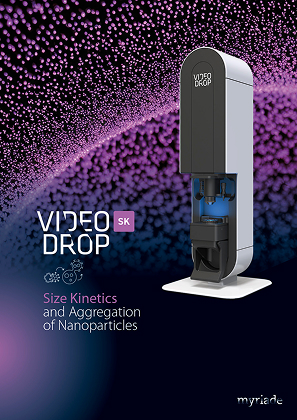
Size Kinetics
and Aggregation
of Nanoparticles